.jpg)



Green Constituencies Dialogue: Parliamentary Dialogue on Climate and Nature Conservation

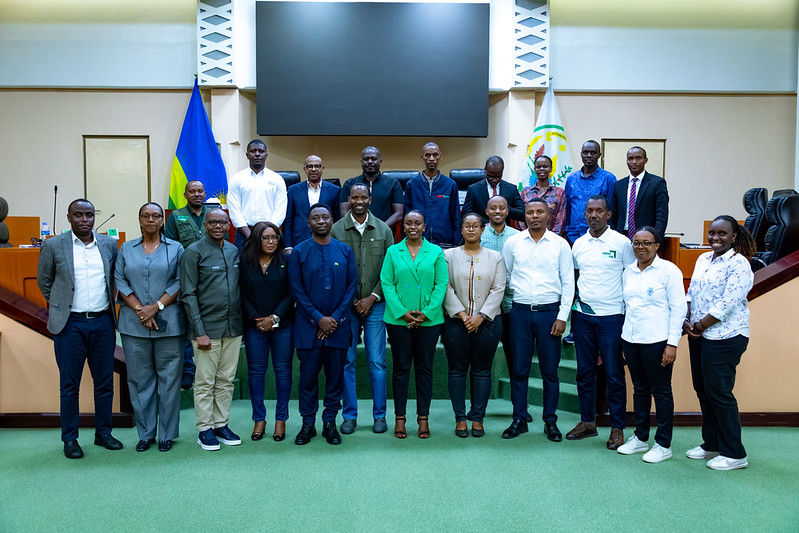
The Green Constituencies Dialogue takes place in Yerevan from 13 to 15 October, shortly before COP17 of the Convention on Biological Diversity opens in the same city. It is co-hosted by Climate Parliament and the United Nations Industrial Development Organization (UNIDO), with support from the Green Climate Fund through the Parliamentarians for Climate Finance project and co-funding from the ASU Julie Ann Wrigley Global Futures Laboratory.
The Dialogue brings together Memebrs od Parliament (MPs), academic experts, investors and development partners. It will look at how parliamentarians Can use their roles in legislation, budgeting and oversight to support action on climate biodiversity and attract finance for projects that benefit local communities. This includes blended finance, public private partnerships and other approaches that can reduce risks for investors
Participants will hear directly from MPs who have supported development that protects nature in their own countries, with a view to repeating and expanding what has worked.
A central question is how the global target to protect 30 per cent of the Earth's land and sea by 2030 can be translated into action at the local level. For communities living alongside forests, grasslands and other important ecosystem, this means finding ways to improve access to energy and create economic opportunities while reducing pressure on the land.
By showing the value of conservation at local level, the Dialogue seeks to strengthen political support for ambitious action on nature.
Dr Sergio Missana, Secretary-General, Climate Parliament
"We are bringing parliamentarians together in Yerevan for the Green Constituencies Dialogue because the commitments governments make at COP17 will ultimately be delivered in the places MPs represent. The target to protect 30 per cent of the world’s land and sea by 2030 means little to a family that has no electricity and still cooks with firewood, so we need to show that protecting nature can also improve access to energy and create new sources of income. Our message to governments arriving for COP17 is that parliamentarians are ready to turn these commitments into the laws, budgets and projects that will make a difference in their constituencies."
Green constituencies, rooftop solar and nature
Under the Kunming-Montreal Global Biodiversity Framework, countries have committed to protecting 30 per cent of the world's land and sea and to restoring 30 per cent of degraded ecosystems by 2030. As governments meet in Yerevan for the Convention on Biological Diversity COP 17 later this month, the question they face is how those commitments will be delivered in the places where nature is most under pressure.
Many of those places are rural communities in sub-Saharan Africa, where most of the 600 million Africans without electricity live and where two thirds of people rely on firewood and charcoal for cooking.
Climate Parliament sees rooftop solar as one part of the answer. Solar panels on homes, schools, clinics and businesses can provide electricity without requiring additional land for large power plants. They can also bring power closer to where it is needed, reducing the need for new transmission infrastructure. This matters for biodiversity because land is already under pressure. Where new energy infrastructure requires farmland or natural habitat, it can add to the competition for land. Generating more power from buildings that already exist can help reduce some of that pressure.
Parliamentarians have a central role in making this happen, because the laws, budgets and standards that decide how quickly rooftop solar spreads are set and scrutinised in parliament. It also shows why energy in nature are best approached together since the same rooftop can bring power to a household, ease pressure on a forest and support a local business.
Bringing energy and nature together
Energy and biodiversity have largely been dealt with separately. Climate change and biodiversity each have their own UN Convention, targets and reporting processes. Countries set out their climate plans under the Paris Agreement and their biodiversity plans under the Convention on Biological Diversity. Finance has developed in a similar way with separate funds, criteria and specialists for climate and for nature.
This can make it difficult to support projects that deliver benefits in both areas. A project that brings electricity to a community, reduces the use of firewood and supports local businesses may sit across several different policy and funding frameworks.
Climate Parliament wants to bring these approaches together. In a constituency, energy, farming, forests, livelihoods and public services are part of everyday life and the people who live there experience them together. Parliamentarians are in a strong position to connect them, because the same members scrutinise energy policy, environmental law and national budgets and represent the communities affected by all three. A joined-up approach would mean climate and biodiversity plans that support each other, finance that recognises benefits of projects for both climate and nature and decisions on energy that take account of their effect on land and ecosystems from the start.
Clean power that leaves the land for nature
Large solar farms need land and in many countries that land is either farmland or natural habitat. While energy projects take over farmland, farming tends to move further into forests and grasslands, so the pressure on nature grows even when the project itself avoids protected areas. Utility scale projects also need transmission lines, which can cut through habitats, as well as upgrades to grids that in much of Sub-Sahara Africa are already old and overstretched. Power lines across the regions lose an estimated $5 billion worth of electricity every year, with losses in most regional markets of between 10 and 20 per cent.
Rooftop solar avoids these problems by generating power on buildings that already exist and close to where it is used. No land needs to be cleared and very little power is lost along the way. When systems are paired with batteries, households and businesses also draw less from grids that are already under strain.
Ilaya Ismael Guedi, Member of Parliament, Djibouti
"À Djibouti, l’un des défis majeurs consiste à concilier l’expansion urbaine et la préservation de notre biodiversité, notamment de nos mangroves, qui constituent un patrimoine écologique essentiel à la protection de nos côtes et à l’équilibre de nos écosystèmes marins. Face à l’agrandissement de la ville et au développement des infrastructures, il est de notre responsabilité de promouvoir une urbanisation durable et respectueuse de l’environnement. En tant que parlementaires, nous devons veiller à ce que les politiques de développement intègrent pleinement la protection de ces espaces naturels fragiles. Notre ambition est de bâtir un Djibouti moderne et prospère, où la croissance économique ne se fait pas au détriment de notre patrimoine naturel, mais s’inscrit dans une vision durable au bénéfice des générations futures.
In Djibouti, one of the major challenges is reconciling urban expansion with the preservation of our biodiversity, particularly our mangroves, which constitute an essential ecological heritage for protecting our coastlines and maintaining the balance of our marine ecosystems. In the face of the city’s expansion and infrastructure development, it is our responsibility to promote sustainable and environmentally friendly urbanization. As parliamentarians, we must ensure that development policies fully incorporate the protection of these fragile natural areas. Our ambition is to build a modern and prosperous Djibouti, where economic growth does not come at the expense of our natural heritage, but rather forms part of a sustainable vision that benefits future generations. "
Reaching people the grid has not
For millions of people in rural areas, waiting for the national grid is not a realistic option. Extending it to remote communities is slow and expensive and running new lines through forests or wildlife areas brings its own risks for nature. The International Energy Agency finds that mini grids and standalone systems, most of them solar, are the most viable way to bring electricity to rural Africa, where more than 80% of people without power live. Extending the National Grid will remain the most sensible option for many towns and the areas around them and Climate Parliament support stronger and more efficient grids. The case for rooftop solar is strongest in rural communities living alongside forests, grasslands and other ecosystems, which is exactly where the link between energy and biodiversity matters most.
Livelihoods that give people a reason to protect nature
The connection between clean energy and biodiversity also comes through in livelihoods.
Firewood and charcoal remain the main cooking fuels for most households in Sub-Saharan Africa, collecting them puts sustained pressure on forests and woodland. Electric cooking powered by solar, particularly with efficient appliances such as electrical pressure cookers can reduce that pressure, while also cutting the smoke that damages health in millions of homes.
Solar power can also support businesses linked to nature.Iin remote areas eco-tourism often depends on diesel generators or unreliable grid connections. Reliable solar power can help lodges and community tourism businesses operate with lower running costs while keeping more economic activity within the community.
Agroforestry provides another example. Growing trees alongside crops can keep land under tree cover while providing farmers with income from fruit, nuts and other products. Solar powered drying, refrigeration and processing can help communities preserve and process what they produce locally, increasing the value they retain from their crops. The wider point is that protecting nature is easier when communities can earn living from landscapes without exhausting them.
What parliamentarians can do
Barry Gardiner, Climate Parliamnet Trustee and Member of Parliament, UK
" Climate finance and nature finance have developed separately, each with its own funds, rules and specialists. Too often a project that benefits both can struggle to fit either. Delegates at the Climate Parliament are the legislators that approve national budgets and scrutinise the commitments their governments make. Our role is to work with those parliamentarians to ensure that national strategies for energy, climate and the environment do not undermine each other. Our aim is for every parliamentarian at the Dialogue to go home and check whether the finance being deployed to bring clean power to their communities is also protecting nature, biodiversity and the land around them."
As elected representatives, they see these connections in their own constituencies and are well placed to champion community-owned projects that combine clean energy, local livelihoods and the protection of nature.
Parliamentarians can:
support financing schemes that make systems affordable for low-income households and small businesses
scrutinise national climate and biodiversity plans together, so that commitments made under the two conventions support each other and do not pull in different directions
use planning and permitting rules to make sure the energy transition avoids harm to habitats
Green Constituencies is about connecting national commitments with decisions made locally. For a community, access to electricity the health of the forest, the viability of a small business and the quality of public services are not separate issues.
Rooftop solar is a practical way to bring some of these interests together. It can put clean power on buildings that already exist, support local businesses and public services and reduce some of the pressure to use new land for energy infrastructure. For parliamentarians, it provides an opportunity to connect energy access, economic development and nature protection through the decisions they make in their constituencies and in national policy.