.jpg)



Parliament of Rwanda engages with real clean energy solutions

Rwanda has committed to an ambitious transformation. Vision 2050, the Second National Strategy for Transformation and the Green Growth and Climate Resilience Strategy all signal the same direction, economic growth powered by clean energy, not fossil fuels. The country's Nationally Determined Contributions set concrete targets for emissions reductions and climate resilience. On paper, Rwanda knows what it wants to become.
But policy frameworks alone don't generate electricity or cook meals or attract investment. They create the conditions for it to happen. That's where Parliament enters the picture. Parliamentarians shape the legislative and budgetary environment that makes projects feasible, attract investors who believe in the policy certainty, and provide oversight to ensure public resources are spent on what matters.
The challenge Rwanda faces now isn't policy design. It's moving from policy to implementation. The country needs more projects ready to attract capital. It needs investors who see Rwanda as a stable, predictable place to put money into renewable energy. It needs Parliament to understand not just what climate action looks like in theory but what it requires on the ground.
On 31 July, members of Rwanda's Parliament travelled to Rwamagana District to find out. The Second Rwanda Parliamentary Green Investment Dialogue brought together MPs from both chambers, government officials, development partners and private sector representatives for a day that moved beyond presentations into practice. They visited two operational projects, Rwanda's first utility-scale solar power plant and an innovative institutional e-cooking facility that now prepares 30,000 meals a day for schools and hospitals.
Rwanda's renewable energy moment
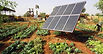
Rwanda has already positioned itself as a regional leader in solar deployment. The Gigawatt Global Solar Power Plant, which the delegation visited on, was Rwanda's first utility-scale solar installation when it was commissioned in 2014. The 8.5 MW facility sits on about 20 hectares near Agahozo-Shalom Youth Village and feeds clean electricity directly into the national grid. It's modest by global standards but significant for Rwanda. It demonstrated, at a crucial moment, that private capital could flow into renewable energy infrastructure in East Africa.
Getting that 23.7-million-dollar project financed required something that often gets overlooked in discussions of renewable energy: investor confidence. The project combined sponsor equity with concessional and commercial debt from development finance institutions including Norfund, KLP, FMO and the Emerging Africa Infrastructure Fund. Those institutions were willing to take the risk because the Government of Rwanda made specific decisions. This included a 25-year Power Purchase Agreement that guaranteed the project would have a buyer for its electricity, a government-backed payment and risk framework, and a tax and regulatory environment that didn't penalise clean energy. Without those guarantees, the capital simply wouldn't have arrived.
For parliamentarians on the site visit, this wasn't an abstract lesson in investment theory. They could see the panels, talk to the project team, understand that this plant works because Parliament and government created conditions for it to work. The lesson is portable. Rwanda can replicate this model if Parliament continues to provide the certainty investors need.
From energy to food systems
The second stop was Solid'Africa's Bijyujyu e-cooking facility, also in Rwamagana. This project operates at a fundamentally different scale and addresses a problem that directly affects Rwanda's development outcomes. Public institutions across the country, schools, health centres, correctional facilities still rely on firewood and charcoal for cooking. That dependence costs money, accelerates deforestation and creates health risks from indoor air pollution.
Solid'Africa's response integrates renewable energy into something most people don't think of as an energy problem: institutional food systems. The Bijyujyu kitchen uses modern electric cooking technologies powered by renewable energy. It sources ingredients from smallholder farmers in the surrounding area, linking rural agricultural production to institutional meal preparation. The result is a working example of what "productive use of renewable energy" actually means beyond the jargon. The facility prepares approximately 30,000 meals daily for hospitals and schools. Solid'Africa is scaling this further, investing in a 100,000-meals-per-day facility in Bugesera.
For parliamentarians standing in an actual kitchen where this was happening, this project wasn't a policy concept. It was concrete, improved nutrition for students, income for local farmers, reduced pressure on forests, and avoided spending on biomass fuels. The business case works. The climate impact is real. Scaling it requires Parliament to shape public procurement systems so schools can more easily transition to electric cooking, budget processes that allocate capital for the investment and financing mechanisms that blend concessional finance with commercial capital.
Understanding the investment reality
The technical presentations that preceded the site visits covered Rwanda's progress in renewable energy expansion, emerging opportunities in clean cooking, and the policy arrangements required to scale these solutions. The World Resources Institute presented institutional clean cooking as an investment opportunity, not charity. The Ministry of Infrastructure outlined progress and priorities. Solid'Africa walked through how its farm-to-plate model actually functions.
But the value of the day wasn't in the presentations. It was in what followed. MPs asking project teams directly about financing barriers, about implementation challenges, about what Parliament could change to make scaling faster. That's when parliament starts to understand where its leverage sits.
Too often, climate action discussions treat Parliament as a policy-writing institution. Parliamentarians should write good climate legislation. Parliamentarians should advocate for climate finance. And yes, both are true. But the delegation at Rwamagana understood something more nuanced: Parliament's role is creating the conditions in which projects succeed and investment flows.
As Jeannette Uwababyeyi, Chair of the Rwanda Parliamentarians Forum on Population and Development, framed it: "This field visit gives Parliament an opportunity to understand the status, investment potential and challenges facing renewable energy and clean cooking initiatives, so that we can better support their advancement through our legislative and oversight role." That understanding matters because it shapes what Parliament does. Legislation that provides certainty for investors. Oversight that holds government accountable for delivering on climate commitments. Budget allocation that prioritises climate finance. Advocacy that keeps these priorities visible.
For institutional clean cooking specifically, Parliament can reshape public procurement frameworks to make it easier for schools and hospitals to switch from biomass to electric cooking. It can influence budget cycles to ensure capital is available. It can demand that financing mechanisms blend concessional and commercial finance. These aren't abstract parliamentary functions. They determine whether projects get built or stall.
What comes next
The visit marked a milestone in the Parliamentarians for Climate Finance (PCF) project, supported by the Green Climate Fund and delivered by Climate Parliament and UNIDO across 15 countries in sub-Saharan Africa. In April 2026 the first Rwanda Parliamentary Green Investment Dialogue was held, bringing MPs and stakeholders into policy conversations on climate finance. The field visit on 31 July represented the next stage, connecting Parliament with the investment-ready projects that policy should enable.

As Jonas Munyurangabo, UNIDO Country Representative, observed, the field visit "bridges the achievements of PCF Phase I with the next generation of Community Green Energy Zone projects by connecting Parliament with practical, investment-ready solutions." The Community Green Energy Zone approach provides a framework for thinking about this integration at scale; coordinating renewable energy investment with productive use, local economic development and climate resilience across a defined geography. Seeing it work at Rwamagana made that framework tangible in a way policy documents alone could not.
For Rwanda, translating this learning into action is now the priority. Parliament needs to embed what was learned into its committee work, its budget oversight and its approach to draft legislation. The momentum needs to move from field visits into the deliberations where policy actually shapes what happens next. That's where Parliament's real work on climate action occurs.
Rwanda has the policy frameworks in place. It has demonstrated projects that work. What it needs now is Parliament translating those into the legislative and budgetary conditions that allow scaling to accelerate.


