.jpg)



2025 Letter from Climate Parliament

Dear friends,
I am writing to give you a summary of the Climate Parliament’s progress over the last year, and to let you know about an exciting development just a few days ago.
Over the last year the Climate Parliament has been developing and discussing proposals for what we are now calling Green Energy Constituencies. Zambian parliamentarians have been closely involved in the discussions and have been sharing the ideas with their President. On November 25, President Hakainde Hichilema of Zambia announced the Presidential Constituency Solar Energy Initiative that, as a first step, aims to install a 2MW solar power plant in every constituency in the country. This initiative will mobilize an initial equity investment of $100 million from the national government and seeks to attract an equivalent amount from private investors. The new solar plants will be community-owned assets, with revenues from electricity sales reinvested locally.
This initiative represents a major breakthrough and a potential game changer for the energy transition as it aligns with a strategy to generate substantial political will by focusing on what legislators can deliver for their constituents. The MPs played a decisive role in bringing the initiative into being. While attending the Climate Parliament’s pre-COP30 conference in Rio de Janeiro, held in early November, one Member of Parliament close to the President was exchanging text messages with him about it. This shows once again what a small group of committed legislators can accomplish when they put their mind to it. Congratulations! Zambia has set an example that could be replicated across the Global South and around the world. It was a direct result of the Parliamentarians for Climate Finance project that we are carrying out in collaboration with the United Nations Industrial Development Organization (UNIDO), with support from the Green Climate Fund (GCF). This project aims to create the conditions necessary for attracting public and private green investment in 15 sub-Saharan African countries. As a result of our capacity-building activities and consultations with legislators, we are concentrating on Green Energy Constituencies. This approach seeks to deploy local solar, wind and small hydro power plus storage, combined with adaptation measures, including air conditioning of communal spaces and clean cooking– and productive uses of energy in agriculture and small industry. Affordable local renewable energy reduces the cost of living, fosters economic and social development, and builds resilience against climate impacts. It is equitable, as it seeks to benefit every constituency, urban or rural, wealthy or poor. A Green Constituencies Fund should provide blended finance to help reduce the cost of capital and aggregate multiple projects into investment portfolios, making them attractive to private investors.
During 2025, as part of the implementation of the Parliamentarians for Climate Finance project, we convened a Parliamentary Green Investment Summit in Rio de Janeiro in November, prior to COP30, the UN climate summit held in Belém. This event brought together MPs from 28 countries in Africa, Asia, Europe and Latin America, as well as investors, senior officials, academic experts, and representatives of international agencies and civil society organizations. This year we organized three regional events in Africa. Two were held in Morocco, one for Francophone MPs (from Côte d'Ivoire, Djibouti, Guinea and Senegal) and one for Anglophone MPs (Kenya, Nigeria and Sierra Leone). One took place in Namibia (with legislators from Botswana, Kenya, Namibia, Rwanda, Zambia and Zimbabwe) and included site visits to two landmark green hydrogen projects.
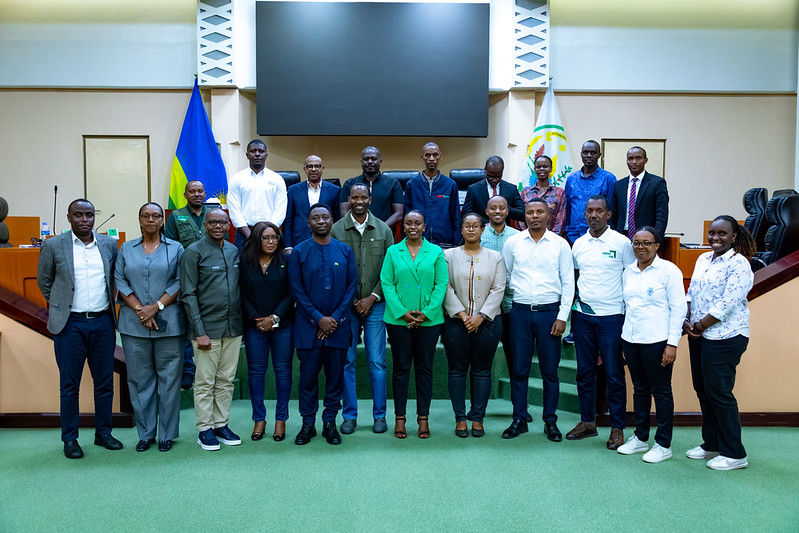
We conducted in-person national capacity-building workshops in 13 countries. The event in the Seychelles was attended by the President. In Rwanda, the full Parliament, more than 100 MPs, joined the workshop. We convened a series of virtual roundtables on climate finance basics, green hydrogen, model legislation and industry decarbonization, among other topics. We prepared policy briefs and other relevant materials tailored to MPs. As a direct outcome of this work, the constituency-level clean energy approach was included in a motion by the Parliament of Botswana and in Seychelles revised Nationally Determined Contribution under the Paris Agreement.
This year, we deepened our engagement with lawmakers in India through a project entitled Empowering Parliamentarians to Accelerate the Energy Transition, focusing our work on energy efficiency in micro, small and medium enterprises and solarization of agriculture. We rebuilt, renewed and strengthened our network of national Members of Parliament, and we established two new groups in the state Legislative Assemblies of Madhya Pradesh and Rajasthan. Our efforts included six capacity-building roundtables and two domestic study tours. In addition to work on energy efficiency and agriculture, the project seeks to highlight India’s international leadership on energy and climate issues, specifically creating a space for collaboration between legislators from Brazil and India. The Climate Parliament secretariat completed a mission to Brasilia to meet with members of the Chamber of Deputies and Senators, along with their teams. A delegation of Brazilian lawmakers visited India, followed by two delegations of Indian MPs and MLAs to Brazil. While implementing this project, we consolidated and established new partnerships with organizations such as the Alliance for an Energy Efficient Economy, CLASP, the Confederation of Indian Industry, the International Solar Alliance, the Rocky Mountain Institute and Sustainable Energy for All.
During 2025, we continued to promote research uptake for the Climate Compatible Growth (CCG) consortium, which brings together some of the UK’s leading universities, including Cambridge, Imperial College, Loughborough, Oxford, Open University and UCL, along with the Centre for Global Equality, Sweden’s KTH Royal Institute of Technology and the Climate Parliament. Some years ago, the Climate Parliament conceived and developed the Green Grids Initiative, a high-level political coalition to build and modernize a key infrastructure for the energy transition. It was launched in 2021 at COP26 in Glasgow by the prime ministers of India, Samoa and the UK, and ministers from Australia, France, Nigeria and the US. CCG now hosts the secretariat of the initiative. This year, GGI published its “Climate Finance Principles to Unlock Grids Financing,” which was endorsed by the UK government and by the Brazil COP30 presidency. The Green Grids Initiative was also asked to coordinate the implementation of COP30’s “Plan to Accelerate the Expansion and Resilience of Power Grids,” which forms part of the COP30 Action Agenda.
In February, we organized an eCooking and Energy Planning Workshop in Lilongwe, Malawi, in collaboration with the Modern Energy Cooking Services program (MECS). Funded by UK Aid, MECS researches the socio-economic dimensions of a transition from polluting fuels to a range of modern cooking fuels, with emphasis on the deployment of pressure cookers using solar energy. The event brought together more than 30 parliamentarians, regulators and energy experts from four continents. Its purpose was to explore how electric cooking solutions can be integrated into national policies and accelerate the sustainable cooking transition.
The Climate Parliament is an international, multi-partisan network of legislators working to combat climate change and protect the living planet. We work to identify climate and environment champions, and build relationships of trust and collaboration, leading to the establishment of multi-partisan, gender-diverse national groups. As an action-oriented network, providing staff support at the national level is crucial to our success. In 2025, our team expanded significantly, as we welcomed more than 30 new members. Our team is now based in 20 countries in Africa, Europe and South Asia. Each new member has brought unique skills, experience and expertise, and we are delighted to provide them with opportunities for career development and growth. Many are young and on their way to becoming climate and environment leaders of the future.
During 2026, we plan to build on the momentum of the Green Constituencies Dialogue to help parliamentarians deliver clean energy, resilience and productive uses of energy at the local level, following the example of Zambia and India. Our work will center on creating pipelines of projects and concept notes to raise funds for local energy and industry. We plan to expand our work on biodiversity, with a strong focus on adaptation and nature-based solutions. We plan to engage again on grid modernization and large-scale renewable energy generation and green industry projects, in line with the COP29 Green Energy Zones and Corridors Pledge.
I would like to take this opportunity to express my gratitude to our extraordinary and committed network of legislators around the world, who are true climate and environment champions, and to our partners, trustees and supporters, who include the Climate Compatible Growth programme, the Climate Emergency Collaboration Group, the Green Climate Fund, the Modern Energy Cooking Services programme and other generous donors. My sincere thanks also go to the Climate Parliament team, led by Executive Director Lucy Pearson, Programme Manager Léa Hillaireau, Network Managers Lilia Chanaoui and Eliza Cocksworth, and India Lead Raj Pal.
We look forward to our continued collaboration with you.
Sincerely,
Sergio Missana, PhD
Secretary-General
Climate Parliament